
EU customs registration for steel shelving from China
Specified Chinese-origin steel shelving and components enter EU customs registration from 12 September. UK sellers holding affected stock should check product scope, origin and possible future anti-dumping liability with their EU importer.
- Who this affects
- UK sellers supplying the EU with covered steel shelving or components originating in China, and their EU importers or customs representatives. This is not a general rule for every furniture or parcel shipment.
- Seller action
- Check before sending affected goods
Match the shelving and components to the regulation’s product description, confirm customs origin and the TARIC code, and discuss potential future anti-dumping liability with your EU importer or customs representative.
- Effective dates / current position
- Registration of covered steel shelving imports: — In forceTiming follows the confirmed published schedule; it is not a fresh legal review. The status concerns customs registration only, not the imposition of a new anti-dumping duty. Registration lasts nine months. Brussels time is the EU-wide display convention, not a carrier cutoff. Date-only changes use the calendar day in Europe/Brussels.
- Last reviewed
- 11 Sept 2026 — an editorial source check, separate from automatic timing.
- Official source
- Open the primary source ↗
What is changing?
From 12 September 2026, EU customs authorities must register imports of specified steel shelving and components originating in China. The European Commission published Regulation (EU) 2026/2023 on 11 September. Registration lasts nine months from its entry into force.
Registration creates a record of the affected imports while the anti-dumping investigation continues. Anti-dumping duties are additional import duties that may be imposed following an investigation into unfairly low export prices and injury to EU producers.
Which products are covered?
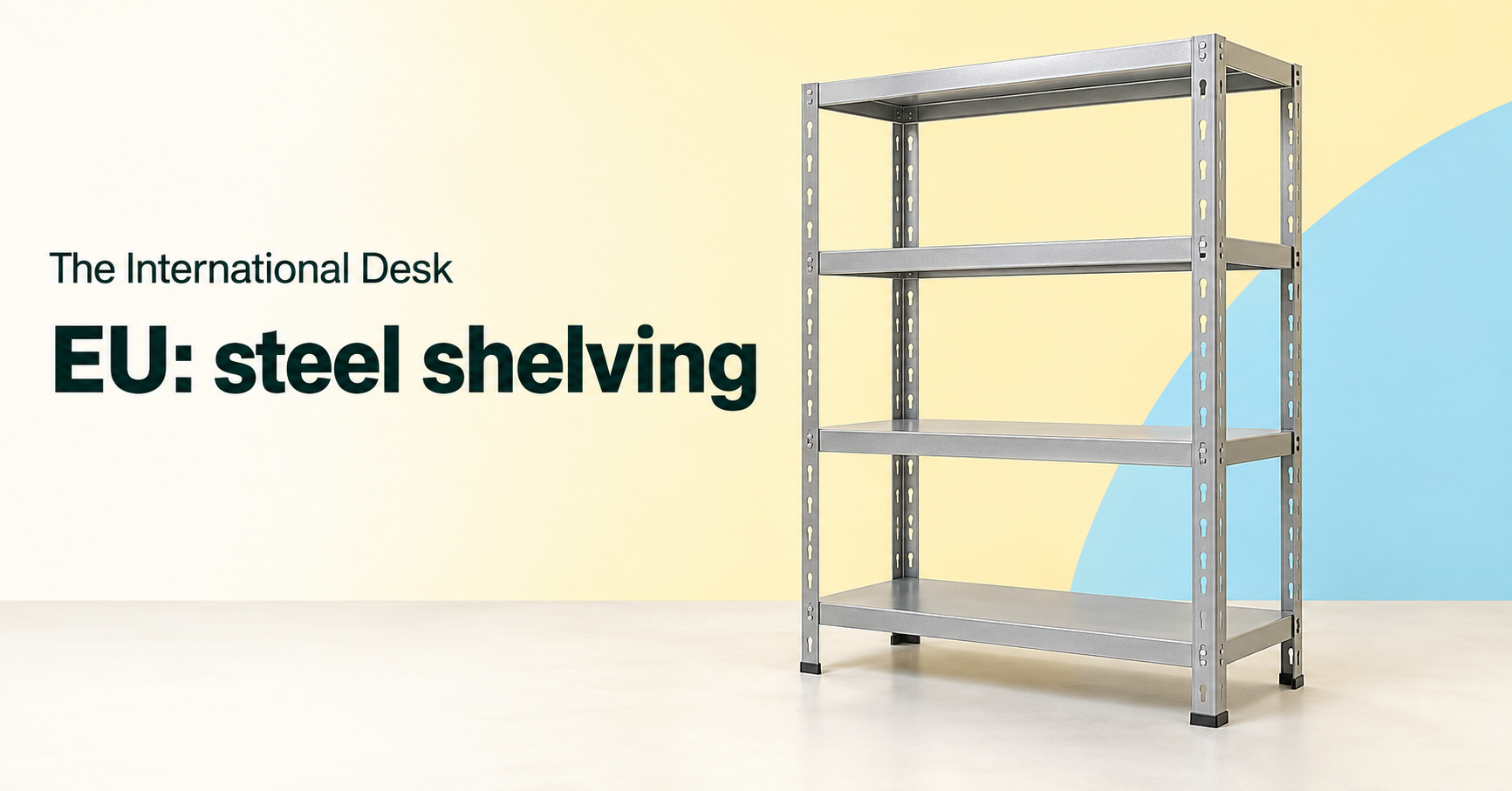
The scope covers specified bolted and boltless steel shelving and components originating in China. It includes steel uprights with two flat connection surfaces and steel beams without welded upright connectors, and shelving units incorporating either of those components, with or without decks of any material.
- CN ex 9403 20 80 — TARIC 9403 20 80 20.
- CN ex 9403 99 10 — TARIC 9403 99 10 20.
“Ex” means only part of that CN heading is covered. The regulation’s product description determines the scope; the codes are provided for information. Do not assume every metal shelf or furniture part is included.
Does shipping from the UK make a difference?
UK dispatch alone does not change customs origin. A UK retailer buying Chinese-origin shelving, storing it in a UK warehouse and reselling it to an EU customer may still be supplying goods covered by this measure.
Confirm origin using reliable supplier and production information, not simply the seller’s address. The starting checks are the product, origin and EU import arrangements—not an assumed parcel-value exemption.
Does registration mean extra duty is due?
Registration itself does not impose a new anti-dumping duty. It preserves the possibility of collecting duties retrospectively if a later definitive measure finds that the legal conditions are met.
That does not mean every import recorded during the nine months will automatically receive a duty bill. Article 10(4) of the EU’s basic anti-dumping regulation permits retrospective collection on qualifying registered imports entered for consumption up to 90 days before provisional measures apply, subject to further conditions and never before the investigation began.
No eventual duty rate is confirmed by this registration measure. Complaint estimates are not current charges or reliable forecasts, so do not use them to set a customer surcharge. Existing duties and taxes still need to be checked separately.
What should UK sellers do now?
- Identify affected stock. Compare the full product specification with the regulation’s scope; include components where relevant.
- Confirm origin and classification. Obtain supplier evidence and check the EU code with your importer or customs representative.
- Agree the import arrangements. Ask who handles registration and who would bear any later duty liability under your commercial agreement.
- Keep the evidence. Retain specifications, origin information, invoices and import references, and check for later investigation measures before quoting or dispatching.
If you do not sell the covered products, this measure does not require a general change to your parcel data or prices.
Official sources
- European Commission: Regulation (EU) 2026/2023, published 11 September 2026 — product scope and registration timetable ↗
- EU basic anti-dumping Regulation 2016/1036 — Articles 10(4) and 14(5), retrospective collection and registration ↗
Related specialist update: EU customs registration for welded steel mesh from China and Türkiye.