
US deposit checks for Chinese wooden cabinets and bathroom vanities
US importers of certain Chinese-made fitted cabinets and vanities need to check two deposits with different start dates. A flat-pack kit can qualify, so send the fitting instructions and the producer and exporter names before quoting.
- Who this affects
- UK resellers and US importers of Chinese-made wooden cabinets and bathroom vanities for permanent installation, including covered flat packs and components.
- Seller action
- Check before sending affected goods
Send the US importer the fitting instructions, parts list and legal names of both the Chinese exporter and producer so it can check the two deposit cases.
- Effective dates / current position
- Revised antidumping deposits apply to covered cabinet entries: — In forceRevised countervailing deposits apply to covered cabinet entries: — In forceTiming follows the confirmed published schedule; it is not a fresh legal review. The two published reviews use separate consumption entry dates. The display uses Washington DC calendar time. Date-only changes use the calendar day in America/New York.
- Last reviewed
- 24 Nov 2026 — an editorial source check, separate from automatic timing.
- Official source
- Open the primary source ↗
Does a flat-pack bathroom vanity count?
A UK bathroom retailer sells a Chinese-made wooden vanity designed to be fixed to the wall. The US orders can cover the vanity assembled or flat-packed, including when it arrives with a basin and tap. In that example, the order covers the wooden vanity. Give the importer an itemised invoice so it can distinguish the cabinet from the plumbing fixtures.
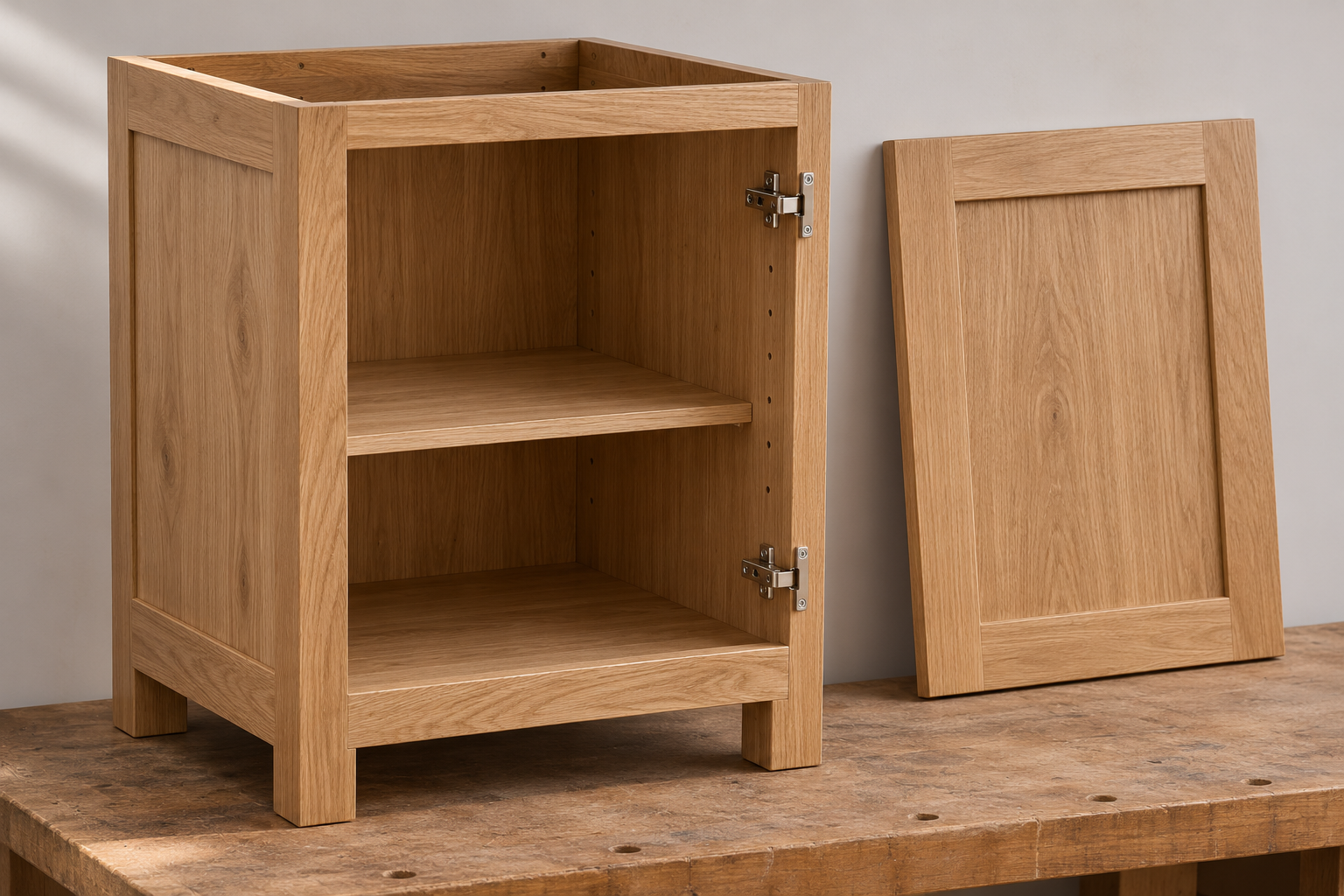
The written scope covers certain wooden cabinets and vanities for permanent installation and specified components such as cabinet boxes, frames, doors and drawers. Send the importer the fitting instructions, material specification and parts list. It should check the scope and exclusions for your particular product, including the separate treatment of goods already covered by the Chinese hardwood plywood orders.
Which exporter is on the US entry?
The antidumping deposit instructions apply to covered goods entered for US consumption, or withdrawn from warehouse for consumption, from 12 November 2026. US Customs lists six named exporters under the China-wide case and six deactivated case numbers. For example, KM Cabinetry Co., Ltd. is listed under A-570-106-000 at 251.64%. Yixing Pengjia Technology Co., Ltd. is listed under its own case at 7.48%.
If you resell from the UK, give the broker the legal name of the Chinese exporter that supplied you. A non-Chinese exporter without its own rate uses the rate applicable to that Chinese exporter. Ask the broker to check entries filed under an older case number as well as your next shipment.
Why does the importer also need the producer?
A separate countervailing deposit, covering subsidies, applies to covered US consumption entries and warehouse withdrawals from 16 November 2026. US Customs instruction 6327410 includes named producers, exporters and a specific pairing for KM Cabinetry exports produced by Zhongshan Nu Furniture. A reseller’s invoice alone may not establish that pairing.
Ask the broker to match any producer and exporter combination first. Where no combination rate exists and both firms have different individual rates, the instruction uses the higher one. The two deposits have different case numbers and start dates. Use the actual entry date and the broker’s confirmed cases when quoting a delivered price. Final duties are assessed separately.
Official sources
- US Customs antidumping instruction 6320404 with the exporter list and deactivated case numbers
- US Customs countervailing instruction 6327410 with the producer and exporter rules
- US Department of Commerce antidumping review, 12 November 2026
- US Department of Commerce countervailing review, 16 November 2026
- US Department of Commerce continuation of both orders, including the written product scope and exclusions
Updates to this article
First published after checking both US Customs deposit instructions, the two entry dates and the written scope for cabinets, vanities and components.