
US solar-product imports: check temporary volume controls before shipping
Temporary US controls can restrict covered solar-product shipments. Check the importer’s registration date, product classification and weekly volumes before dispatch; these are not general ecommerce parcel limits.
- Who this affects
- UK businesses supplying covered polysilicon, solar cells or solar modules to the United States, and their US importers and brokers.
- Seller action
- Check before sending affected goods
Before dispatch, confirm the US importer’s CBP registration date, the goods’ classification and aggregate weekly volumes. Check whether Commerce approval or an importer-specific restriction affects the shipment.
- Effective dates / current position
- Temporary solar-product controls begin: — In forceTiming follows the confirmed published schedule; it is not a fresh legal review. The rule states that the temporary controls apply through 3 December 2026. US Eastern calendar time is a display convention, not an invented legal cutoff. Recheck expiry and the separate December regime before later shipments. Date-only changes use the calendar day in America/New York.
- Last reviewed
- 23 Sept 2026 — an editorial source check, separate from automatic timing.
- Official source
- Open the primary source ↗
Updates to this article
First published after checking Commerce’s temporary final rule, including the operative supplement and weekly limits. Distinguished the 22 September commencement from scheduled Federal Register publication on 24 September and from separate December tariff arrangements.
What changed?
The US Commerce Department’s temporary final rule states that it applies from 22 September through 3 December 2026. It was filed for public inspection on 22 September ahead of scheduled Federal Register publication on 24 September. The later publication date is not the effective date stated in the rule.
Commerce is monitoring established importers for stockpiling. It can notify US Customs and Border Protection (CBP) that an importer’s volumes substantially exceed historical averages, leading to a prohibition on further covered entries before 4 December. This is an individual assessment, not one numerical limit for every established importer.
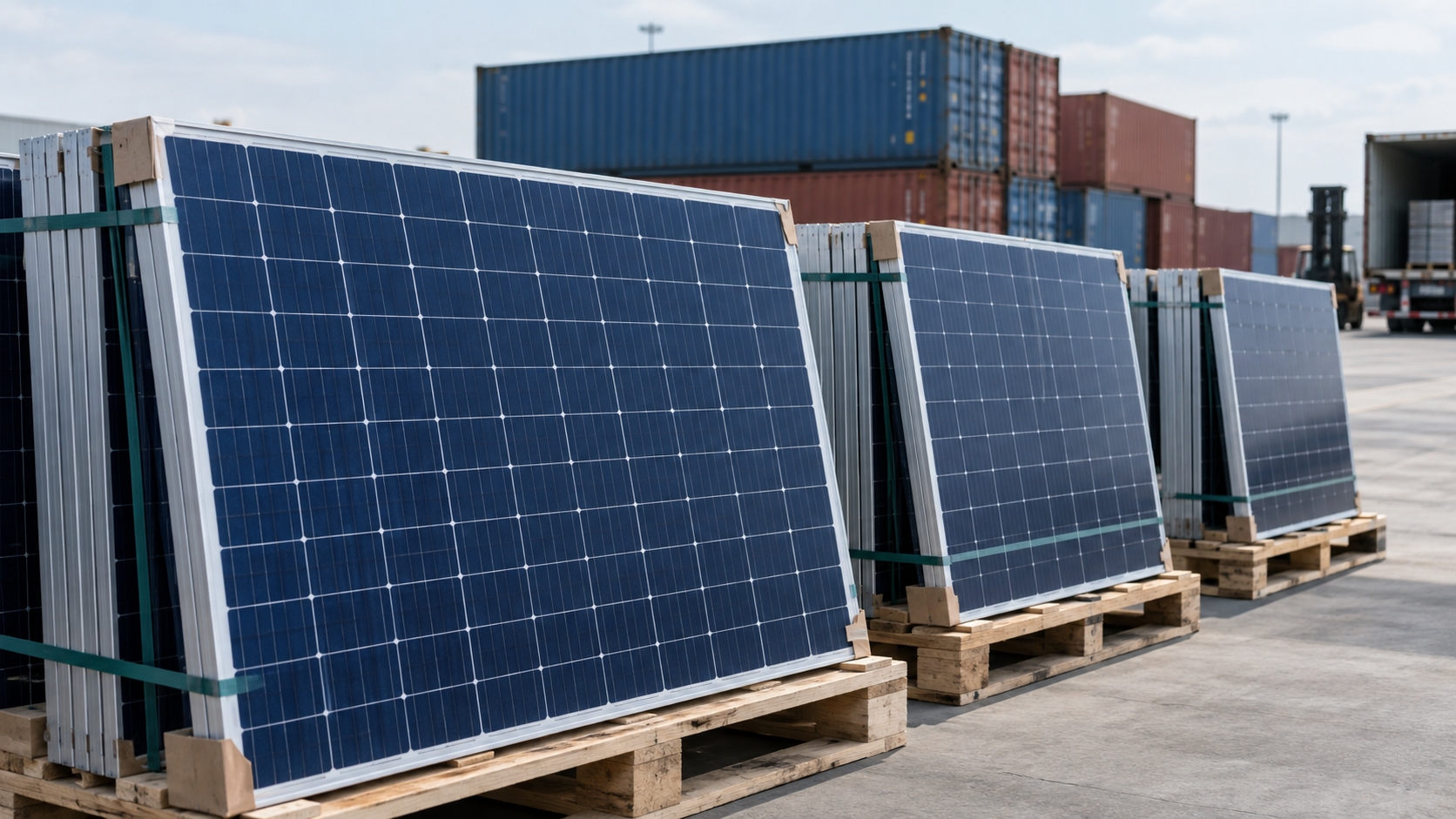
New importers have weekly limits
For importers of record registered with CBP on or after 6 August 2026, the maximum weekly quantities without Commerce approval are:
- 2804.61.00: 12 kg.
- 3818.00.0020, 3818.00.0040, 3818.00.0045, 3818.00.0050 and 3818.00.0091: 7 kg, as grouped in the rule’s table.
- 8541.42.00 — solar cells: 2,000 units.
- 8541.43.00 — solar modules: 55 units.
These are importer-level weekly limits, not allowances for each parcel or order. Ask the broker to confirm the exact classification and aggregate imports. Do not assume UK dispatch or UK origin removes these controls.
What should an affected UK seller do?
- Confirm the US importer of record and its CBP registration date.
- Match the products to the covered classifications before accepting delivery commitments.
- Review weekly volumes and, for established importers, historical import patterns with the importer.
- Do not divide shipments across affiliated or newly created importer numbers to evade controls.
- Where approval is needed, follow Commerce’s waiver process before importing above the permitted limit.
Commerce’s waiver process asks for ownership, product, volume, intended-use and commercial-purpose information, with a senior-officer certification. Follow the full official application instructions; this article is not a complete application checklist. Commerce intends to respond within 14 days, but that is not a guaranteed clearance time.
Keep other US requirements separate
These temporary controls are separate from the future minimum-price and tariff arrangements referenced in the rule and from solar anti-dumping and countervailing-duty cases. Meeting a volume limit does not satisfy every other US import requirement. This briefing does not calculate a combined duty rate.
Use the pre-dispatch checklist to prepare your underlying shipment information.
Official sources
- Commerce: temporary final rule, document 2026-19537 — effective dates, preamble sections II–IV and operative supplement, including Table 1.
- Proclamation 11052: polysilicon and derivatives — underlying authority, including clause 11 on stockpiling. December rate guidance needs a separate review.